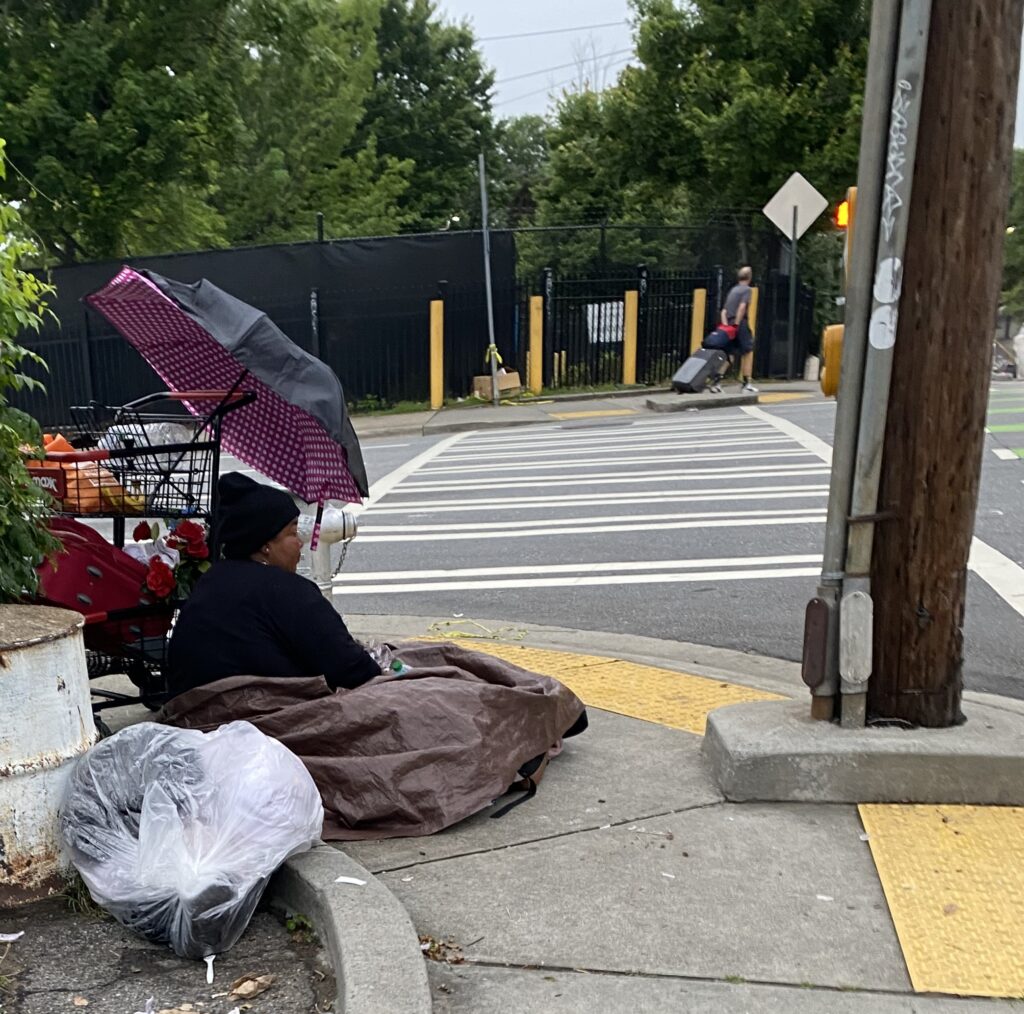
Can you imagine surviving on the streets of downtown Atlanta for 13 years? That’s how long Peaches lived outside before Mercy Care Case Manager Vickie Moore‑Clark was finally able to build enough trust to help her come inside.
Peaches was born in a military hospital in New York in the 1960s, where she grew up with a sister and two brothers. After her mother died when Peaches was in her 20s, she eventually made her way to Atlanta to be closer to family. Somewhere along that journey, she became homeless. She lost all of her documentation, which meant she could not access her disability benefits, leaving her physical and behavioral health needs untreated.
For more than a decade, Peaches lived at the Pryor Street encampment near the Gateway Center—an area marked by frequent police presence and periodic violence. Everyone in the neighborhood knew her. Many outreach workers tried to help, but Peaches resisted, driven by years of paranoia and distrust.
Nothing moves forward without documentation
Housing requires identification, and replacing lost documents can take months. Vickie began the long process of securing an ID for Peaches, then applied for housing. When they finally received word that an apartment was available, Vickie gathered Peaches and all of her belongings—packed into the shopping cart Peaches used as a walker—and brought her to the housing office.
That’s when everything fell apart. There had been a miscommunication. The apartment wasn’t available after all. Peaches had nowhere to go.
Vickie was resolute. She was not putting Peaches back on that corner.
Resourceful partners step in
Overwhelmed and out of options, Vickie called Mercy Care CEO Kathryn Lawler, who reached out to Amanda Van Dalen, Director of Residential Services at the Gateway Center. Amanda had known Peaches for years from serving her at Gateway’s warming center. Together, they found a solution.
Peaches was given temporary refuge in a quiet, private space at the Gateway Center’s Men’s Recuperative Care—just down the street from the corner she had called home for 13 years. She stayed there through October while Gateway provided meals and Vickie checked on her daily, bringing hot water and helping with sponge baths. It was a truly collaborative effort.
Many case managers had tried before. When asked why she succeeded, Vickie said, “It took time for her to trust me and I went at her pace.” She added, “I knew how far to take a promise, and I acknowledged her and let her be in control.”
Inside at last
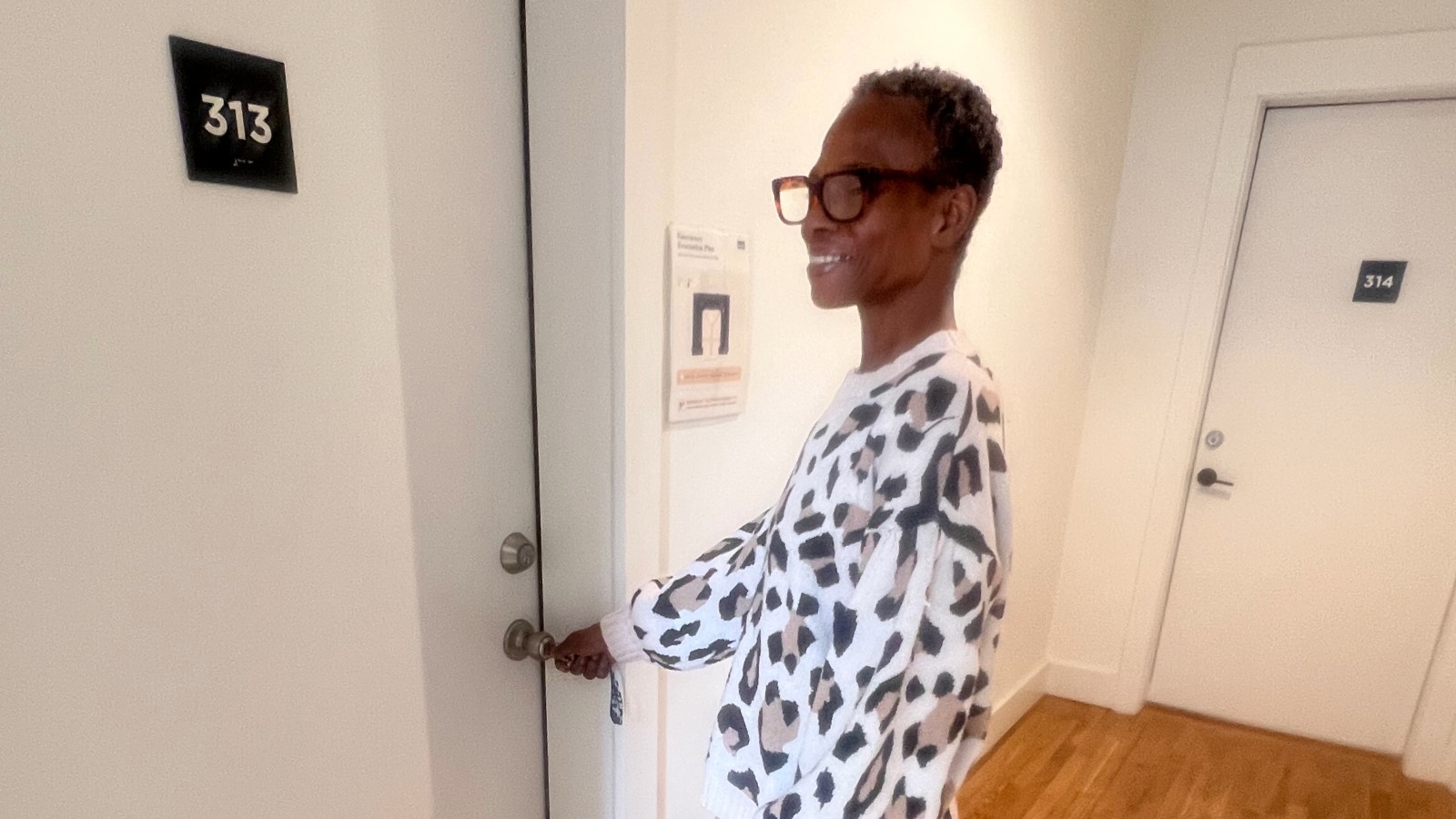
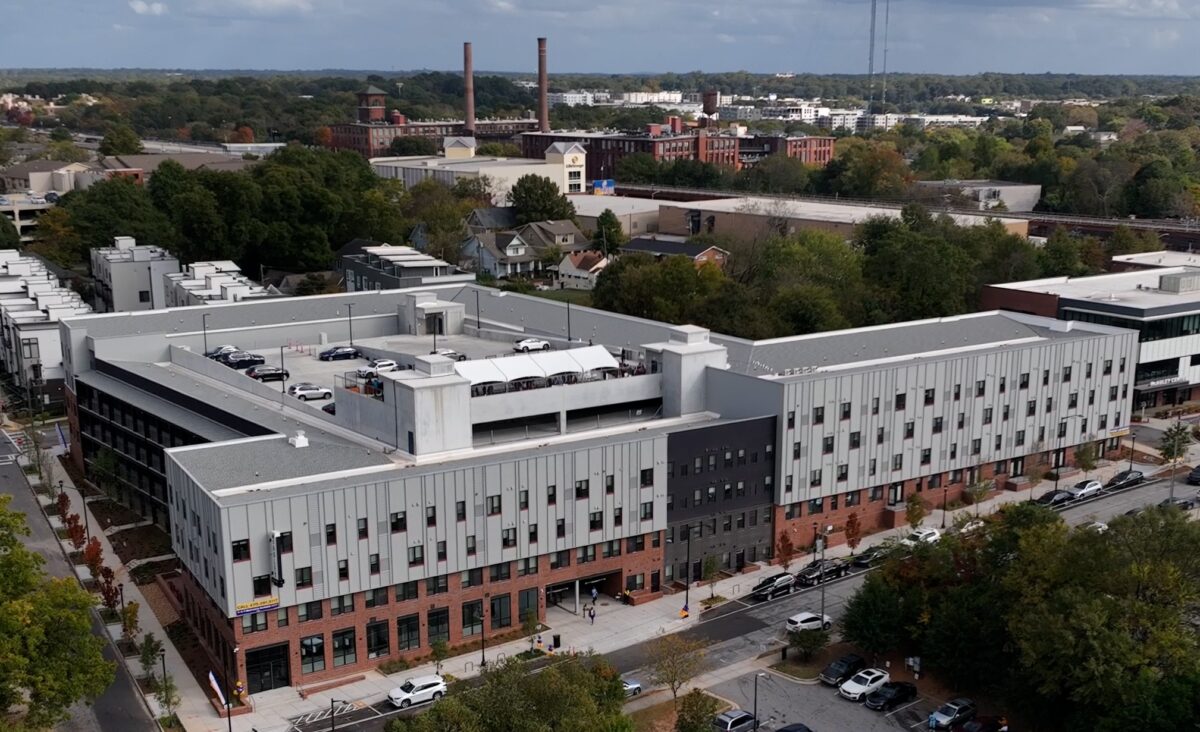
In November, Peaches moved into The Melody, part of Atlanta’s rapid housing program. For the first time in years, she had her own room and bathroom. Knowing the apartment would be tight for someone using a wheelchair, Vickie immediately began applying for larger, ADA‑compliant housing.
Although Peaches’ case was eventually transferred to the property’s case manager, Vickie remained deeply involved. When she was asked to step back temporarily, the impact was clear. “I was shocked at how much she had regressed physically,” Vickie said after returning weeks later. Peaches’ circulation had worsened, and her hygiene had declined.
“I will never walk away from her again. I saw the difference when I did, and I’m not going to do that again.”
As Peaches adjusted to life indoors, Vickie visited weekly. “After 13 years of living on the street, adjusting to life back inside can be a difficult adjustment,” she said. “It took three months to convince Peaches to take a shower—but once she did, she loved it!”
Vickie has since enrolled Peaches in food stamps and is working to reinstate her disability benefits. When an ADA‑compliant apartment opened at Waterworks, she immediately began planning Peaches’ next move. While researching Peaches’ Social Security history, Vickie also discovered a way to reach family members—and is now helping Peaches to reconnect with her brothers.
After 13 years on the street, Peaches has a home, a bed, her own bathroom, identification, food assistance, and a path back to healthcare—all because one person refused to give up.
Compassionate care means finding solutions when none seem possible.